Volt
Blog/Making slots
How to make a slot game: from idea to a playable build
Volt team·11 min read·Oct 22, 2026
The short version. A slot is four things that have to agree: a mechanic (how it pays), the math (how often and how much), the art and sound, and a front end that plays it. Decide the mechanic and the feel first, build the math to fit, make the art to the board's real sizes, play every kind of round before you ship, and check the platform's rules early. Most rework comes from those four drifting apart.
We're making three slots of our own while we build Volt: Laser Bear (5×4, 20 lines, wilds and free spins), Buddy (5×4 lines with wilds that expand to fill a reel) and How to Fish (5×5 cluster pays with tumbling symbols). The examples below come from them.
1. Start with the mechanic and the feel
Before any numbers, decide two things:
- How it pays. Lines (wins along fixed paths), ways (any adjacent symbols left to right), cluster pays (groups of touching symbols), or pay anywhere. With cluster pays, tumbles (winning symbols disappear and new ones fall in) usually come along, because they turn one win into a chain.
- What a great round feels like. Frequent small wins and a gentle feature, or long quiet spells and a feature that can explode. That's volatility, and it decides almost everything that follows.
Laser Bear's hook is one idea ("locks on and blasts symbols into wilds"); How to Fish's is another (blow the fish up instead of catching them). One clear hook makes the feature, the art and the math easier to agree on.
2. Design the math
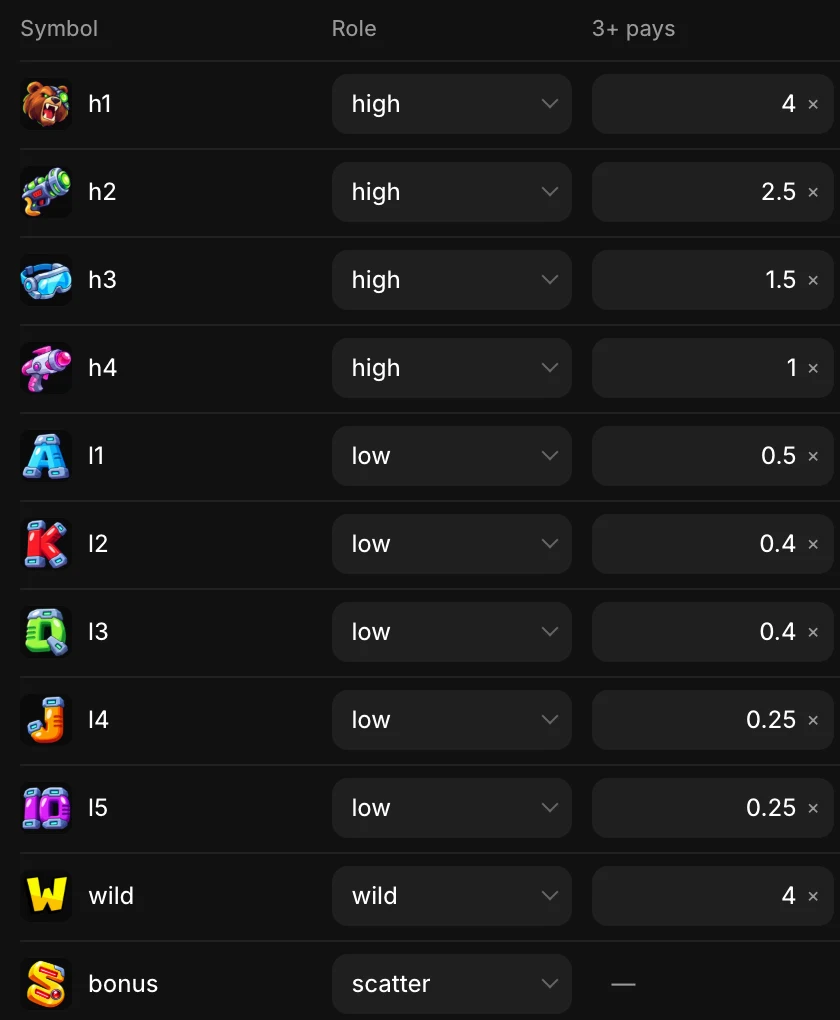
The math is the game. It sets the board, the symbols and their pays, the reel strips or weights, the features and how they trigger, the bet modes (for example a bonus buy), the max win and the targets: RTP, hit rate, volatility and feature frequency. If those terms are new, start with RTP, volatility and hit rate, in plain words.
Modern slot math is built by simulation: you play the game hundreds of thousands of times in software, measure the results, and adjust weights until the numbers hit your targets for every mode. Some platforms go further. On Stake Engine, every possible round is simulated before publication, and the server picks from that fixed library; see how a Stake Engine game works.
Two practical rules:
- Design to the platform's limits from day one. On Stake Engine, every mode's RTP must sit between 96.0% and 96.7% and the max win can't exceed 1,000,000× (lower for the best bet limits). Finding out at submission costs weeks.
- Make the feature reachable. A free spins round that comes every 400 spins can be great; one that comes every 4,000 feels broken, whatever its RTP.
3. Make the art and sound to the board
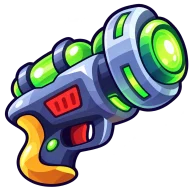
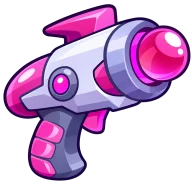
A slot needs more art than it looks: high and low symbols, a wild, a scatter, backgrounds for the base game and the feature, a logo, a reel frame, win celebrations, a number font, and often animations (Spine is common) for symbols landing and winning. Sound is its own list: reel stops, wins by size, the feature's intro and music.
- Draw to real sizes and check symbols on the board at phone size, where most play happens.
- Keep one style across the set. Reviewers notice inconsistent art; Stake Engine's guidelines name "over-reliance on generic AI-generated assets" as a common reason for low scores. If you use AI to make art, use it to make one consistent set, not a pile of mismatched images.
- Make it yours. Platforms reject sample assets and borrowed IP.
4. Build the front end
The front end shows the reels, animates each round's events, and handles the bet, the balance and the rules. Online slots are web games: usually a canvas renderer (PixiJS is common) in a web framework, built as a static site. It has to work at every size from a phone in portrait to a wide desktop, and show the rules screen, every symbol's pays and each mode's RTP.
The front end should never decide outcomes. It plays what the math and the server say happened, in order, so the game the player sees is exactly the game that was certified.
5. Play every kind of round
Spinning by hand until the feature comes is slow and misses edge cases. Instead, play specific rounds on purpose: a loss, a small win, a big win, the feature trigger, a retrigger, the max win, and each bet mode. Watch them at phone and desktop sizes. Check that wins count up correctly, that sub-cent amounts display properly, and that a round interrupted by a reload resumes with the right bet. This is also when you collect round IDs: Stake Engine's reviewers ask for one per mode for a win, a big win, the win cap, a loss and a bonus trigger.
6. Check the rules, then publish
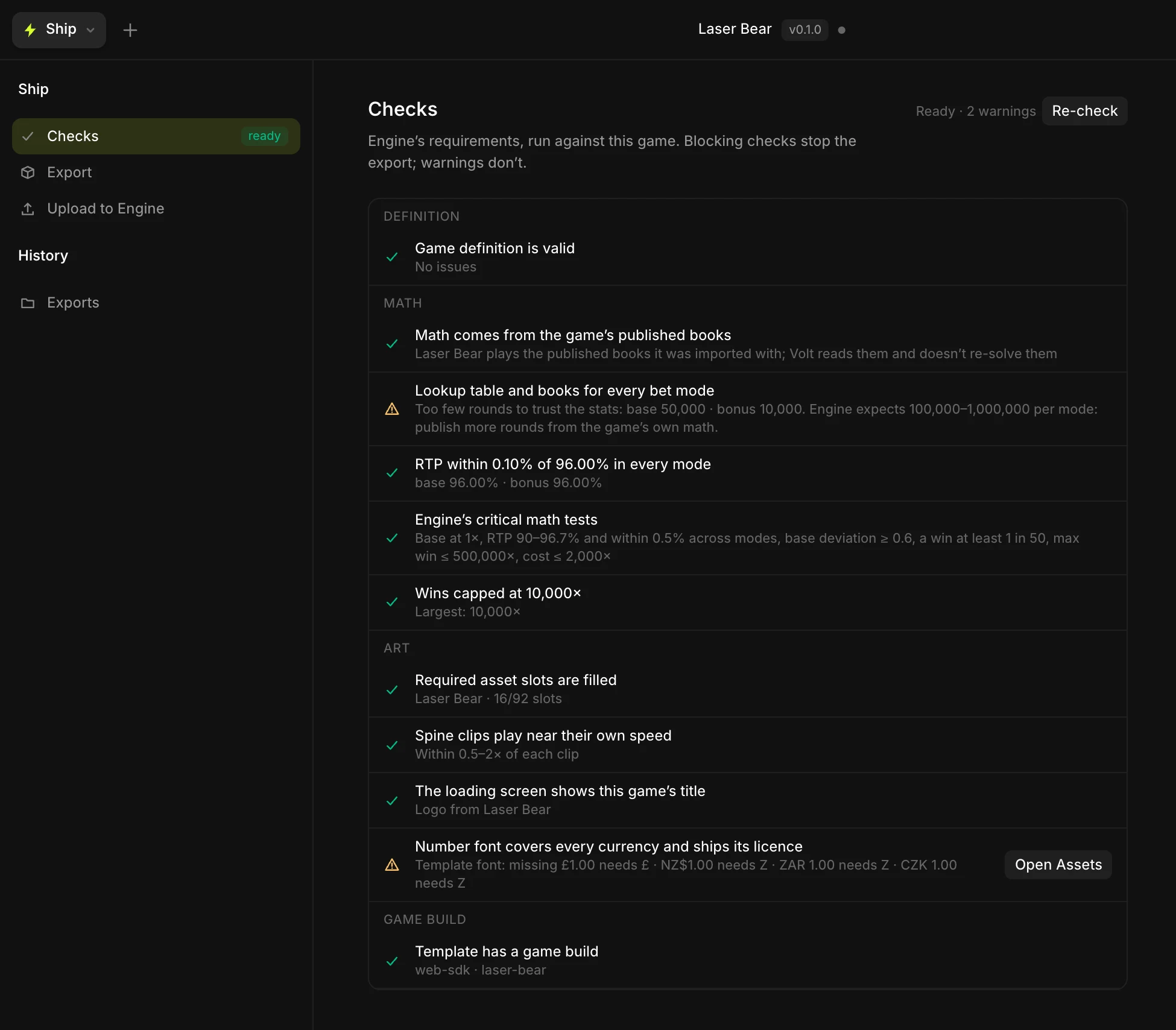
Every platform has a checklist. On Stake Engine it's the math tests, front-end and server rules, mandatory bet replay, wording rules for the social casino, a game tile, and a review by three people who score the game in stars. The Stake Engine module goes through all of it in order, from the math SDK to getting paid.
Where the time really goes
In our experience the hard part isn't any one step; it's keeping them in agreement. A pay table changes and the art's win animations no longer match the thresholds. A feature changes and the rules screen is wrong. The front end works at desktop size and the logo covers the symbols on a phone. The fix is to keep the math, the art and the build in one place and to play the actual game after every change, which is the reason we're building Volt.
Frequently asked questions
How long does it take to make a slot game?
It depends on the team and the scope. A simple game with existing tools can take weeks; a polished game with custom art, animation and a complex feature usually takes months. Math and art are typically the longest parts.
Do I need to know how to code to make a slot?
For the front end and for most math SDKs, yes, or a teammate who does. Tools exist that turn more of it into settings, but the platform's file formats and rules still apply.
What's the difference between lines, ways and cluster pays?
Lines pay along fixed paths across the reels. Ways pay for matching symbols on adjacent reels in any position, left to right. Cluster pays pay for groups of touching matching symbols anywhere on the board, often with tumbles.
How do I publish a slot on Stake?
Through Stake Engine: build the math and front end in its formats, upload them in its Studio dashboard, pass its tests and review, and approved games go live on Stake. Our Stake Engine module walks through it step by step.
What tools do slot developers use?
Commonly a math SDK or simulation scripts (often Python), a web game stack such as PixiJS, an animation tool such as Spine for symbols and big wins, and art and sound tools. Volt brings the math, art, the playing game and the platform checks into one app.